La Rambla
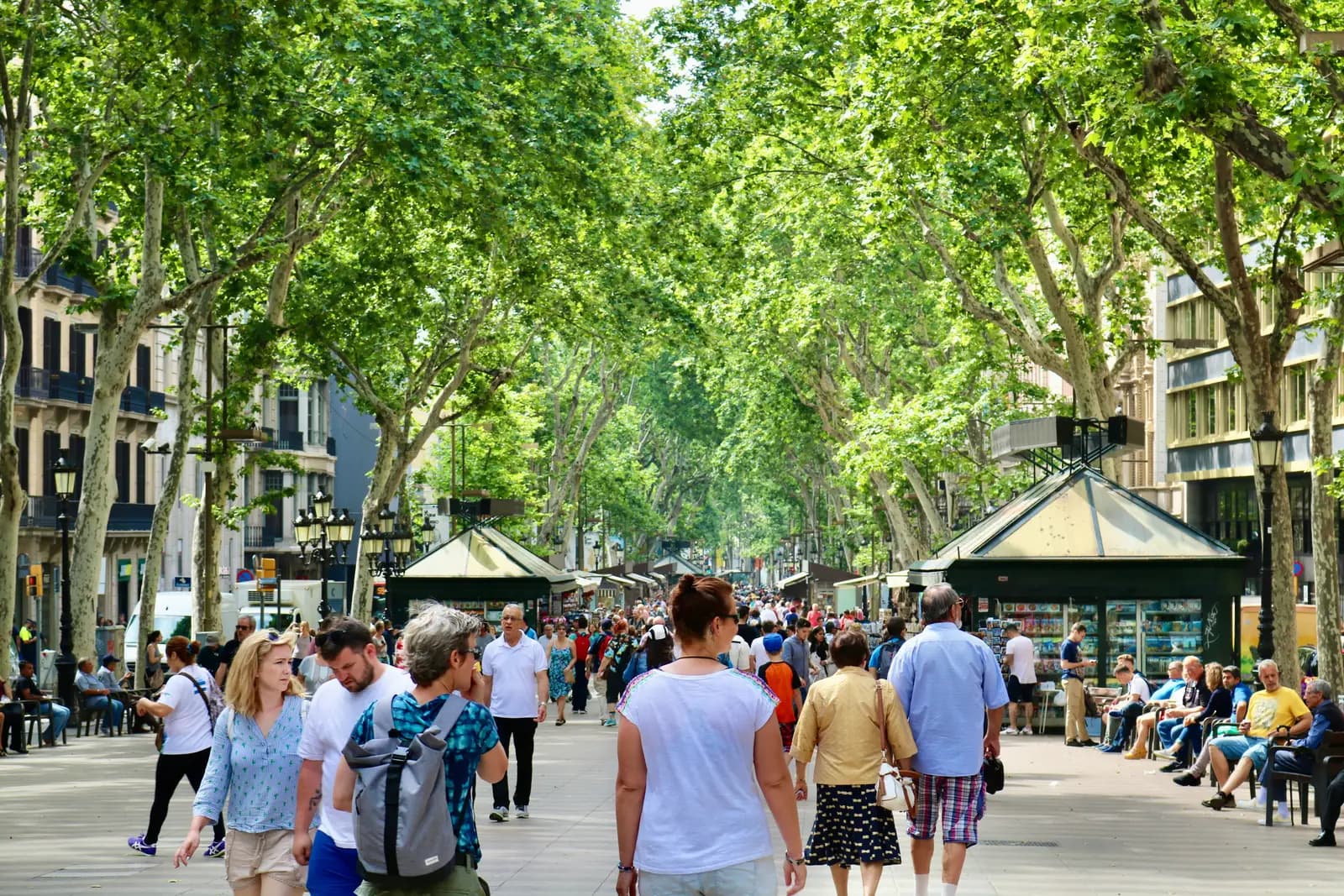
Photo: Jorge Fernández Salas on Unsplash
- Category
- Neighborhood
- Hours
- Open access 24 hours
- Price
- Free
- Neighborhood
- Ciutat Vella
- How to get there
- Metro L3, Catalunya, Liceu or Drassanes stops depending on the stretch
"Las Ramblas" in the plural is the Spanish form; in Catalan it's "La Rambla", singular, which is the street's actual name, though people often talk about several stretches with their own names. The word comes from the Arabic "ramla" (sandy ground): before being paved over, it was literally the dry bed of a stream running outside the medieval city walls, and it wasn't turned into a promenade until the 18th century.
Walking down from Plaça Catalunya toward the sea, you pass through Rambla de Canaletes (with its fountain, where tradition says whoever drinks from it is doomed to return to Barcelona), Rambla dels Estudis, Rambla de Sant Josep — next to the Mercat de la Boqueria —, Rambla dels Caputxins — with the Gran Teatre del Liceu and Miró's mosaic on the ground, the Pla de l'Os — and finally Rambla de Santa Mònica, close to the Columbus Monument.
It's a classic pickpocketing hotspot, so keep your bag closed and avoid flashing your phone in the crowd. It's much more enjoyable early in the morning, before it fills up with people and you can browse the flower stalls without the crowds, than in the mid-afternoon.
Frequently asked questions
Is "Las Ramblas" the same as La Rambla?
Yes, "Las Ramblas" is the plural Spanish form; in Catalan it's "La Rambla", singular, which is the street's actual name.
Is it safe to walk along La Rambla?
Yes, but it's a classic pickpocketing hotspot; keep your bag closed and avoid flashing your phone in the crowd.